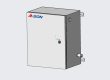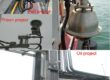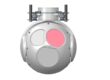
Rotary Kiln Shell Temperature Monitoring System
Advanced Infrared Thermal Monitoring for Rotary Kilns
The Rotary Kiln Shell Temperature Monitoring System is specifically designed for continuous temperature monitoring of rotary kilns used in industries such as:
- Cement Production
- Alumina Processing
- Ferroalloy Manufacturing
- Pelletizing Plants
- Fertilizer Production
- Metallurgical Industries
The operating environments and monitoring requirements of these kilns are similar to those found in cement plants, making this system an ideal solution across multiple industrial sectors.
Non-Contact High-Precision Temperature Measurement
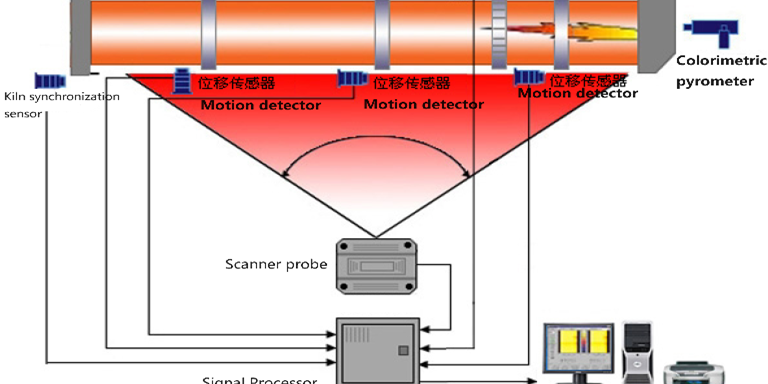
The system continuously measures the surface temperature of the rotary kiln shell through advanced infrared thermal radiation technology.
By utilizing high-resolution infrared scanning, the system can accurately detect temperature variations even in hard-to-reach areas of the kiln shell without physical contact.
Key Benefits
- Non-contact temperature measurement
- High-resolution thermal imaging
- Full kiln shell coverage without blind spots
- Real-time temperature monitoring
- Early detection of refractory failures
- Improved kiln operational safety
Real-Time Kiln Shell Thermal Imaging
The dedicated monitoring software generates a complete thermal map of the entire kiln shell surface in real time.
Features
- Displays full kiln shell temperature profile
- Refreshes one complete thermal image per kiln revolution
- Synchronized imaging with kiln rotation
- Continuous trend analysis
- Historical data recording and reporting
Operators can instantly identify abnormal temperature zones and take preventive action before serious damage occurs.
Advanced Infrared Scanning Technology
This system is independently developed based on the world’s leading kiln scanning technology, including concepts utilized in the renowned Denmark FLSmidth ECS/CemScanner® system.
The monitoring solution incorporates a powerful ScanLine infrared scanner specifically engineered for rotary kiln applications.
Scanner Advantages
- Accurate temperature measurement
- Fast thermal response
- Long operational lifespan
- High reliability in harsh industrial environments
- Continuous 24/7 operation
Early Hot Spot Detection
One of the most critical functions of the system is the early identification of kiln shell hot spots.
Hot spots often indicate:
- Refractory brick damage
- Refractory brick detachment
- Lining wear
- Abnormal kiln operating conditions
Early detection helps operators:
- Prevent catastrophic kiln failures
- Reduce unplanned shutdowns
- Lower maintenance costs
- Extend refractory service life
- Improve production efficiency
High-Performance Infrared Detector Technology
The ScanLine infrared scanner utilizes advanced Mercury Cadmium Telluride (MCT) infrared detector technology combined with a high-performance amplification circuit.
This design ensures:
- Excellent measurement accuracy
- High sensitivity
- Long-term stability
- Reliable operation in high-temperature industrial environments
Comprehensive Monitoring Functions
The system provides multiple communication and monitoring interfaces to support various plant automation requirements.
Optional Modules
Wheel Slip Detection Module
Monitors kiln tire and shell movement to identify abnormal wheel slip conditions.
Cooling Fan Control Module
Automatically controls cooling fans based on shell temperature conditions.
Optical Fiber Communication Module
Provides long-distance, interference-free signal transmission.
Burning Zone Detection Module
Accurately identifies and tracks the kiln burning zone.
Shadow Area Detection Module
Automatically compensates for shadowed regions to ensure complete thermal coverage.
Main Features
✔ Continuous 24/7 kiln shell monitoring
✔ Real-time thermal imaging
✔ Full shell temperature mapping
✔ Hot spot detection and alarm
✔ Refractory condition monitoring
✔ Historical trend analysis
✔ Industrial communication interfaces
✔ Remote monitoring capability
✔ High measurement accuracy
✔ Low maintenance requirements
Typical Applications
Cement Plants
Monitor refractory condition and optimize kiln operation.
Alumina Kilns
Ensure stable thermal performance and reduce maintenance costs.
Ferroalloy Plants
Detect hot spots before shell damage occurs.
Pelletizing Plants
Improve process reliability and production efficiency.
Fertilizer Production Facilities
Maintain safe kiln operation and reduce downtime.